Fallow Deer - King of Our Forests or Intruder?
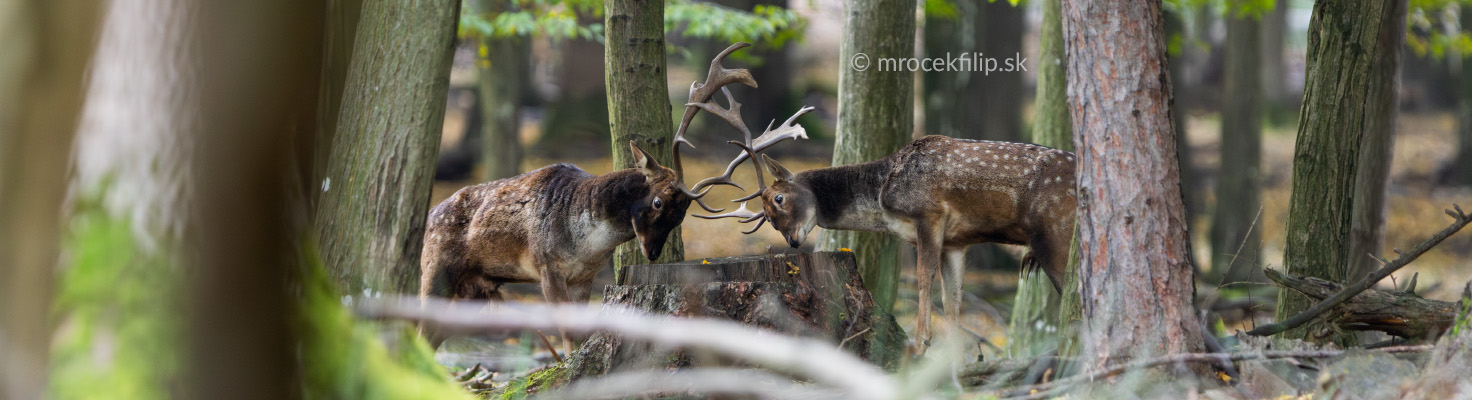
The fallow deer in Slovakia stirs strong emotions - admired for its beauty, yet criticized for its impact on nature. Is the fallow deer the new king of our forests, or a noisy intruder? One thing is certain: it has settled well in our woods and is thriving more than many ever expected. Thanks to its remarkable ability to adapt to life near humans, it has successfully populated areas where other species struggle to survive. Its social nature, slightly exotic appearance, and growing numbers attract the attention of many - hunters, photographers, nature enthusiasts, and curious tourists alike. Take a look through my telephoto lens and see their world up close.

Fallow Deer and Its Origins
The fallow deer (Latin: Dama dama) is not a native species of Slovakia or Central Europe. Its origins likely trace back to the regions of the eastern Mediterranean - Asia Minor (modern-day Turkey), Greece, and possibly parts of today's Israel and Lebanon. Through human influence, it gradually spread into Central Europe, with the main motivation probably being its breeding in game preserves. Permanent settlement of the fallow deer in our territory is estimated to have occurred in the late Middle Ages, probably around the 15th-16th centuries. The species tolerates captivity quite well and is not disturbed by higher population density in enclosed areas, which made it a popular choice for such breeding in the past. Over time, the fallow deer spread from enclosures into the wild, and since around the 19th century, it can be considered an independently living wild species in Slovakia.

Is the Fallow Deer Different from the Red Deer or the Roe Deer?
The fallow deer has successfully joined other species inhabiting our forests and meadows, such as red deer and roe deer. But does the fallow deer live in the same way? When I delved deeper into studying their lives - spending hours observing them through the lens of my camera - I began to notice some differences.

Observing fallow deer in the wild today is no longer a great challenge. They are often seen from cars along the roadside, sometimes we even have to avoid them at night, and during a walk through forests in areas where they are abundant, it's quite possible to spot one at a close distance.
Main Differences
The first and most noticeable difference is the vocal expression of fallow deer. It's common for animals to communicate through sounds, especially during the mating season, when vocal activity is at its peak. Most people have probably heard - or can imagine - the roar of a red deer. Fewer, however, know that roe deer also become more vocal during their rutting season. The most distinctive sound is the doe's high-pitched call, used to signal her presence to nearby bucks. Fallow deer, too, are vocal during the rut, producing a characteristic deep grunt known as "groaning." At first glance, this might make them seem no different from other deer species.

Fallow Deer Rutting Season
The rutting season of the fallow deer is much noisier than that of its relatives from the deer family. What makes it particularly distinctive is the strong territorial nature of the males, who mark their "piece of forest" not only with scent but also through constant vocalizations known as groaning. At a single rutting site, several males are often present at the same time, all groaning continuously. At the peak of the rut, these sounds can be heard throughout the entire day, creating a steady chorus that echoes through the forest in every direction.


Yet another distinctive sound can be heard at the rutting site - and it's not the groaning of the males. It's the "meowing" calls of fawns and females, which add to the overall noise and are partly why the fallow deer is often described as a noisy species. During the rut, the forest resonates with a mix of the males' constant groaning and the calls of the females and young, and at the peak of the season, several dozen fallow deer can gather and fill the area with sound.

This constant clamor is occasionally interrupted by the powerful thuds of massive antlers. The antlers, called "palms," are used by males in combat to test strength, dominance, and determination. The stronger males secure better positions within the rutting grounds, increasing their chances of successful mating.


Conclusion
Whether we like the presence of fallow deer in our forests and meadows or not, the fact remains that they have firmly established themselves here. They have come to love the gentle terrain of our woods as well as the wide meadows and fields. For me, it's fascinating to explore, study, and observe the life around me. I enjoy documenting and capturing the experiences I encounter during my visits to the forest. The fallow deer rut is the most intriguing period of their life for me, which is why I chose to spend time close to them during these fascinating moments. Whether I will continue documenting this behavior during next year's autumn mating season remains to be seen.


See also all Fallow Deer photos or more photos in the portfolio.