Quietly in Bear Country: How a Photographer Moves Where Predators Live
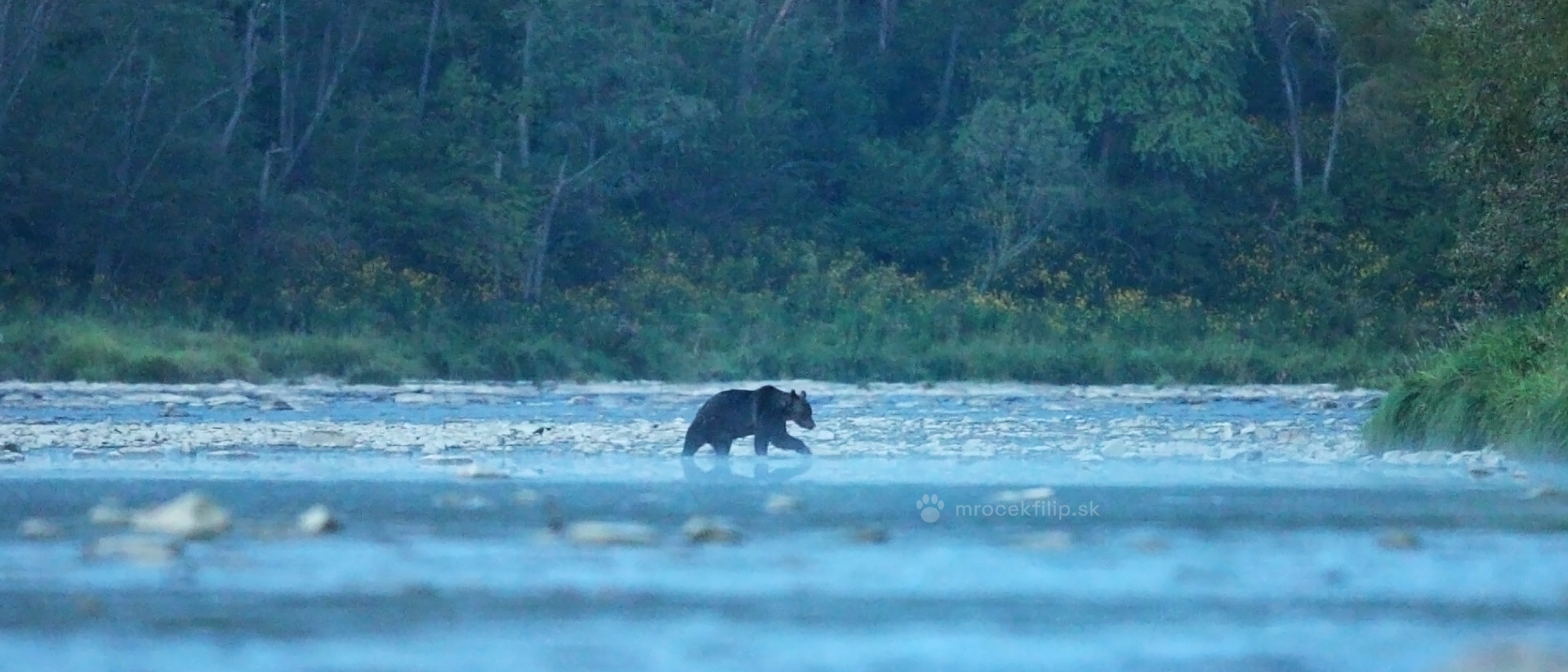
I'm sitting by the river, waiting for wolves. It's the second evening of the trip, and after a long day in the field, tiredness is beginning to set in. I watch every movement on the opposite bank. Sometimes a red deer passes by, other times a roe doe. Then, as dusk falls, something larger appears at the edge of the trees.
A bear.
It emerges from the trees and heads straight across the river. It walks calmly, slowly, majestically. Its body language shows that it feels completely unthreatened - it is in no hurry and senses no danger. It crosses the water and disappears into the trees on my side of the river. Less than a hundred metres from me.
I feel respect and excitement. Not fear. But when I realise that in a few hours I'll be laying out my sleeping gear in these woods, it feels strange. Sleeping in woods where I'm not alone.
I wrote about waiting for wolves and how it all turned out in the article 70 hours in the wilderness and my encounter with wolves. This is a different story - about an animal I wasn't looking for that evening, but which came all the same.
The bear lives here, even when I'm photographing something else
I've never specifically set out to photograph bears. That will certainly change one day - it's an animal I want to photograph and film properly. For now, though, our encounters tend to happen in passing. On camera traps set for wolves or lynx, and occasionally in person, as in this story.
And that's exactly what this article is about. Bears also live in the places where I photograph red deer, roe deer and wolves. I don't have to go looking for a bear for our paths to cross. That makes it all the more important to understand the particular features of these places, remain aware of my surroundings and behave responsibly.

The photographer's paradox
The advice for walkers in bear country is to make your presence known. Talk, make noise, stick to the paths and go out during the day. The bear will know you're there before you meet and quietly move away. Almost every dangerous encounter is the result of surprising one at close range.
A wildlife photographer does the exact opposite. I move quietly and slowly. I'm out at dawn and dusk, when wildlife is most active - and so are bears. I seek out places far from paths, where wildlife feels safe. Everything about the way I move is intended to keep animals from knowing I'm there. But that's also exactly how you can accidentally get close to a bear. And a surprised bear at close range is precisely the situation neither the bear nor I want to experience.
So instead of relying on noise, I manage the risk in other ways:
I read the terrain. The riskiest places are those where I can't see far ahead: dense young woodland, bushes, a stream bed or a sudden change in the terrain. Places where I could find myself face to face with a bear before it has time to leave. In sections like these, I slow down, look around and pay twice as much attention.
I watch the wind. I'm constantly thinking about the wind when photographing - the wildlife mustn't catch my scent. With bears, the wind matters for another reason too: when it blows from me towards the trees, the bear knows I'm there and does what it almost always does - quietly disappears before I even see it.
I look for signs of its presence. Droppings, tracks in the mud, disturbed anthills. When the signs are fresh, I know I'm moving through its living room, and I behave accordingly - with respect.
I use thermal imaging. I carry a thermal imaging monocular in my trouser pocket, not in my rucksack. Before entering denser vegetation or when moving around at dusk, I use it to scan my surroundings. This greatly increases the chance that I'll spot a bear before it spots me - and that's the whole point. Thermal imaging has already shown me wildlife I would never have found with binoculars: a beaver behind vegetation, a roe buck lying in long grass, and so on.
When an encounter does happen
First, one fact that changes the whole picture: brown bears don't hunt people. Almost every attack is defensive - a bear reacts when we surprise it at close range, or when it is defending its young or food. It isn't a monster from the headlines, but an animal that wants conflict just as little as we do.
This is how I behave when I encounter a bear:
- I see it from a distance and it doesn't know I'm there: I calmly retreat in the opposite direction, or wait until it leaves. I don't run or shout. That's exactly how the encounter at the beginning unfolded - the bear went on its way while I stayed quietly where I was, and it never even knew I was there.
- It's close and has spotted me: I remain calm and still, speak in a quiet voice and slowly back away. I get my spray ready. No sudden movements and no running - running triggers a chase response.
- If the worst happens and the bear attacks: I use the spray. If I don't have time, then I lie face down, clasp my hands behind my neck and spread my legs. I stay down even after the attack ends - the bear may come back.
We looked at bear behaviour and how to read their signals in more detail on Fotolovci in the article Heading into bear country for a photograph - if you'd like to explore the subject further, have a look there too.
Spray on my belt
Being responsible also means having one final safeguard. In bear country, I carry SABRE Frontiersman bear spray - and I carry it on my belt, not in my rucksack. If I'm surprised at close range, there is no way I'll get it out of my rucksack in time.
Not all sprays are equal. GearCheckers ran a test of twelve bear sprays, and the differences in both range and strength were enormous. SABRE came first - and one of the sprays in the test actually stopped an attacking female bear. I hope I'll never need mine. But it's always on my belt.
Respect instead of fear
The bear belongs in our countryside. I don't see the fact that it lives in the places where I photograph as a threat, but as part of the deal: I'm a visitor in its home, so I behave accordingly. I remain aware of my surroundings, read the terrain and keep my spray ready - and in return, I sometimes experience a moment like that evening by the river. A hundred metres from a predator walking calmly by...
And one day, when the time is right, I'll set out specifically in search of a bear. With my camera, prepared. But that's a story for another time.