Red Deer Rut 2026: Why the Floodplain Forest Roars First
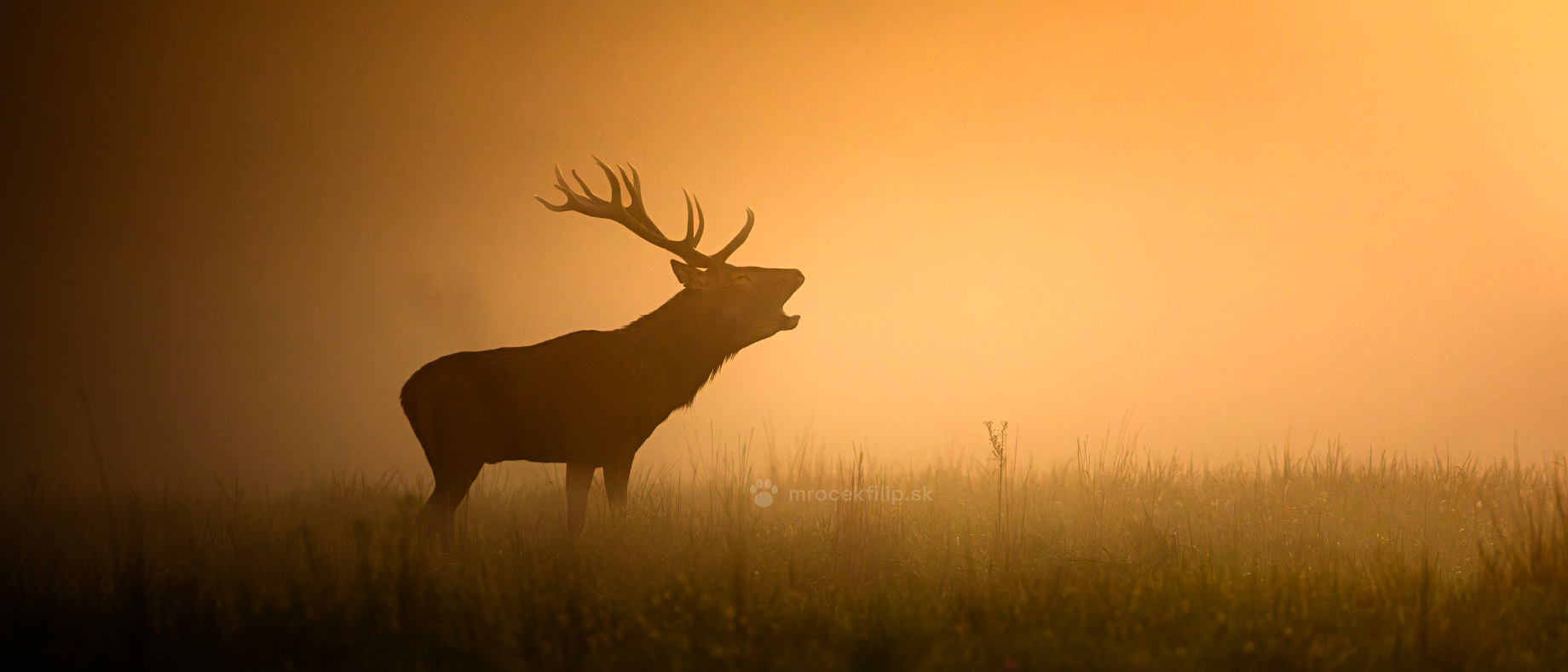
The red deer rut runs from September to mid-October, depending on the weather and altitude. It is the time when the usually wary red deer stag becomes the loudest animal in our forests, and his roars can be heard for miles. This year, I mainly followed the rut in the floodplain forest - and that is exactly where it begins earlier than the calendar would suggest.
A red deer stag is not a bigger roe buck
In my article about the roe deer rut, I wrote that a roe buck is not a smaller version of a red deer stag, but belongs to a completely different branch of the family. At first glance, you can tell them apart by their size: a red deer stag is powerfully built, has a different head shape and carries antlers several times larger than those of a roe buck. But their appearance is not the only thing that separates them. Their timing is different too. The roe deer rut takes place in the middle of summer, around the turn of July and August. The red deer rut does not arrive until autumn. So if you hear deep roaring from the forest in September, it is not a "roe buck in the rut". It is a red deer stag.
It starts earlier in the floodplain forest

The red deer rut is generally associated with September, peaking around the turn of September and October. But that does not quite apply in floodplain forests. In the lowlands, the rut starts earlier - on cold mornings, the first stags can sometimes be heard as early as late August. From my observations, the rut in the floodplain forest can peak around 10 September, while in the mountains it is only just getting under way at that point.
Two types of red deer live in Slovakia. Central European red deer are found mainly in the west, while the larger Carpathian red deer live in the east. In central Slovakia, the two types mix.
How the red deer rut unfolds
During the rut, a red deer stag keeps a group of hinds at traditional sites known as rutting grounds. A strong stag can guard around twenty hinds, and it is a full-time job: he drives back any hinds that stray and must also fend off satellite stags circling the group and waiting for their chance.

The clashes build up in stages. They begin with roaring from a distance, a kind of vocal stand-off. If the weaker stag is not put off, they walk parallel to one another, sizing each other up. Only if that fails to settle the matter do they use their antlers, pushing and twisting until the weaker stag gives way. Most conflicts end with intimidation, but a real fight between evenly matched rivals can result in serious injury.
The entire rut is extremely exhausting for a red deer stag. For several weeks he barely eats and can lose up to a quarter of his body weight.
Mornings when the forest comes alive
I arrived at the site while it was still dark, leaving plenty of time - getting deeper into the area took a while. As I gradually drew closer, the roaring grew more intense. As I walked, I used a thermal imager to scan the surrounding forest and meadows, and more than once I spotted a stag before dawn, visible only as a bright silhouette through the thermal imager. Then all I had to do was reach the edge of the meadow unnoticed and wait for daylight.

By then, my feet were usually soaked. Partly from the dew and partly from the rain, which had finally brought much-needed water to the parched landscape after a dry summer. I have to admit that I quite enjoyed the occasional drizzle and damp conditions.
Misty mornings are part of the floodplain forest: damp air, fog and haze everywhere. When it is cold and clear, the first rays of sunlight cut through the misty meadows, with roaring coming from all directions. For me, it is one of the most powerful experiences our countryside has to offer.
The intensity of the roaring also depends on the weather - cold, clear mornings make it stronger, and the meadow becomes a concert. Warm or windy weather, on the other hand, tends to bring what is known as a silent rut, when the stags make very little noise.
The stag who came to inspect me
Once, I was heading back from the meadow along a forest track and had already written the morning off as an unsuccessful shoot. Suddenly, a red deer stag appeared on the track in front of me. He had not noticed me yet. I had my camera and lens over my shoulder and slowly tried to take it down without startling him.

The stag noticed me - and took a few steps in my direction. He probably thought I was a rival, because when he moved into the forest, he slowly approached me and let out the occasional roar to make it clear who was in charge. I found a spot at the edge of the forest where I could just about take photographs and waited. I was lucky. The stag came within a few metres of me and roared through the tangle of branches.

The king enters the meadow
On other mornings, I managed to catch the red deer out in the meadow itself, which can be exceptionally photogenic at this time of year. Veiled in the morning mist and the light of the rising sun, the hinds emerged from the forest first - a sign that the king of these woods would not be far behind. A dark stag stepped out just behind them, looked around from the middle of the meadow and let out a powerful roar to tell everyone nearby that this was his territory.

The most striking photographic moment came when I managed to capture a roaring stag backlit by the rising sun. It bathed the whole scene in rich orange light, which spread across the meadow and merged with the morning mist.
Red deer, roe deer and fallow deer ruts: three different worlds
We have three common species of deer here - and although their ruts might at first seem to blend into one long "season of love", each species experiences it in a completely different way and at a different time.
As I wrote in my article about the roe deer rut, the roe buck is territorial and solitary. He guards and scent-marks his territory throughout the summer, and when the rut arrives, he usually devotes his attention to one doe: he finds her by scent, accompanies and guards her for several days and, once she has mated, searches for another. It all takes place in the middle of summer, around the turn of July and August.
Fallow deer take a waiting game approach. The bucks hold small territories of their own, each with his own patch of forest. There they groan, scrape hollows, scent-mark - and wait. The does move between these territories and choose the buck themselves. The fallow deer is the only European deer species with this kind of system, and it is one of the finest examples of female mate choice among mammals.
Of the three, the red deer rut is the most active. A red deer stag does not wait for the hinds to come to him, nor does he stay within a single patch of forest. He actively keeps his group together, guards it and moves with it - from the forest to the meadow and back again. While a roe buck guards one doe and a fallow buck defends a patch of ground, a red deer stag defends his entire group wherever it happens to be.
Each of these ruts also manifests itself differently. The roe deer rut is quiet and driven mainly by scent - but it is visible: rutting pairs stay out longer in the mornings and their chases can be seen even during the day. The red deer rut, by contrast, is heard above all else, with deep roars carrying through the forest for miles. The fallow buck makes his presence known by hoarse groaning within his territory. Their timing also differs: the roe deer rut peaks in early August, the red deer rut around the turn of September and October, while the fallow deer rut does not begin until mid-October. So anyone who wants to watch them will find something to see from summer right through to late autumn.

The rut belongs to the deer, not photographers
Although each of these species experiences the most important period of its life differently, they have one thing in common: they are more vulnerable than usual. During the rut, a red deer stag barely eats and loses up to a quarter of his body weight - and any extra energy he uses because of us will be missing in winter.
As photographers, we should therefore be even more responsible at this time. We do not disturb the deer unnecessarily at their rutting grounds, imitate their calls for fun, get too close or ignore the wind, and we make sure we are properly concealed. The finest images of the rut are usually taken when the deer have no idea we are there.
See also all Red Deer photos or more photos in the portfolio.